


9 min read
How magazine publishers can keep readers engaged between issues


For magazine publishers, reader engagement does not have to begin when a new issue is released and end when the reader reaches the last page.
A weekly, monthly or quarterly publishing cycle creates natural peaks in attention. But the time between issues also creates an opportunity: to give readers useful, relevant reasons to return to your brand before the next edition arrives.
The goal is not necessarily to publish more for the sake of publishing more. It is to extend the value of the magazine through digital content and experiences that fit the audience, the editorial identity and the publishing rhythm.
Here are eight ways magazine publishers can build stronger reader relationships between issues.
1. Give readers more than the digital edition
The digital edition can remain at the heart of the magazine experience. It provides the editorial selection, structure and sense of a complete issue that readers already recognise.
But a digital magazine does not have to stop there.
Articles, web content, podcasts, video, games and other formats can give readers reasons to return between publication dates without replacing the curated edition.
This is particularly useful for magazines with longer publishing cycles. A monthly or quarterly publication may have weeks between new issues, while the interests that brought readers to the magazine continue every day.
With Prenly Reader, publishers can bring digital editions, articles, podcasts, games, crosswords and other content together in one digital reading experience across app and web.
If you are developing your magazine's digital offering, you can also explore digital publishing for magazines with Prenly.
2. Use push notifications to bring readers back at the right moment
Publishing new content is only useful if readers know it is there.
Push notifications can create a direct route back to the publication when there is something genuinely worth returning for: a new issue, an important article, a podcast episode, a quiz, an event or a timely update.
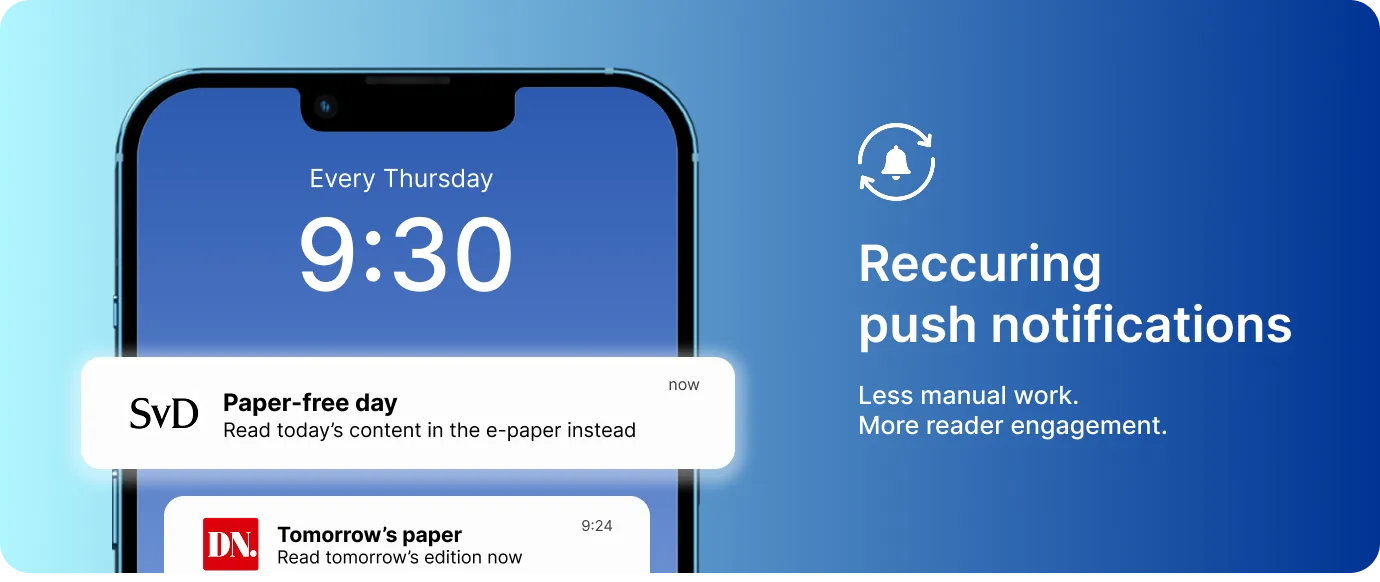
The key is relevance. Sending a notification for everything risks turning a useful channel into noise. Instead, publishers can use push as part of the editorial rhythm and focus on moments when there is a clear reason for the reader to open the app.
For a food magazine, that might mean a weekend recipe collection. For a business magazine, it could be a new analysis or briefing. For a membership magazine, it might be an upcoming event or important member update.
Prenly Reader supports segmented push notifications, allowing publishers to make notifications more relevant to different reader interests.
3. Let readers listen as well as read
Reader engagement is also about making content fit more moments in a person's day.
A reader may not have time to sit down with a magazine article, but they might have time to listen while commuting, walking or doing something else.
Podcasts, article audio and audio briefings can therefore extend both the usefulness and accessibility of editorial content. They also create an opportunity to reuse journalism in a different format rather than always producing something entirely new.
For example, a long-form article could also be available as audio, an interview could become a podcast episode, or a selection of recent stories could be packaged into an audio briefing.
Prenly supports podcasts and article audio as part of the digital reader experience. Publishers can also use enhanced text-to-speech to turn written articles into natural-sounding audio. Learn more about enhanced text-to-speech in Prenly.
Customer case: Helsingborgs Dagblad extends the experience beyond the regular edition
Helsingborgs Dagblad uses Prenly to publish digital-only special editions around major events and to bring podcasts directly into the reading experience.
The podcasts are automatically pulled from HD’s existing feeds, while the publisher can decide whether the content is available to everyone or reserved for specific subscription packages.
This gives HD a way to add more value between regular editions, reuse existing content channels and create new opportunities for premium content – without disrupting the existing publishing workflow.
Read the Helsingborgs Dagblad customer story →
4. Create recurring reasons to return with games and quizzes
Not every visit to a magazine app has to begin with a new article.
A quiz, word game, challenge or competition can create a lightweight reason to come back regularly. For a niche magazine, the games can also become part of the editorial identity rather than feeling separate from the publication.
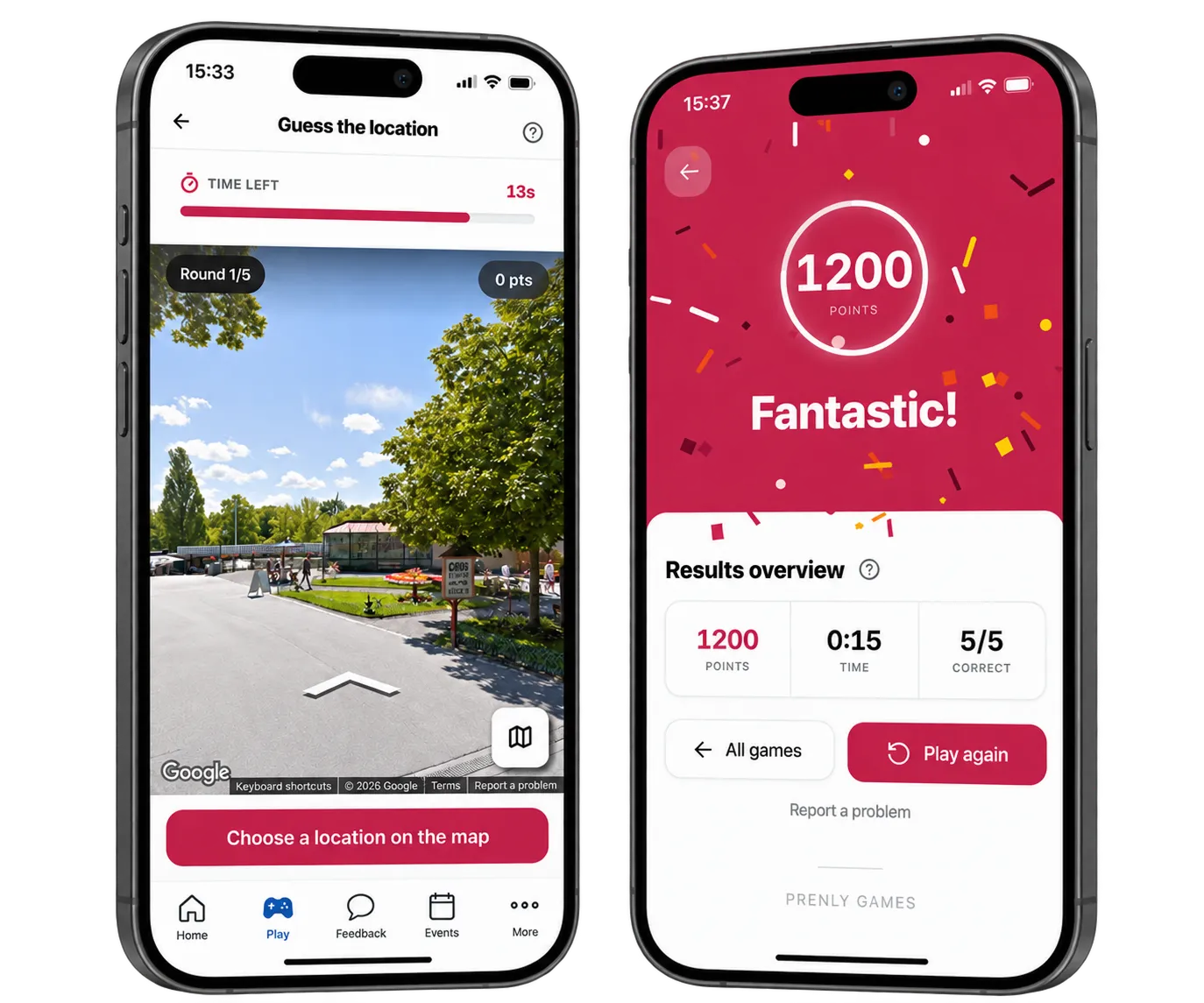
A travel magazine could ask readers to identify destinations. A history magazine could create a timeline challenge. A food magazine could build a quiz around ingredients, cuisines or recipes. A trade magazine could test readers on developments within its industry.
The strongest opportunities often come from connecting games to the magazine's existing expertise and content.
Prenly Games lets publishers add games, quizzes and competitions directly to the existing app, giving readers another reason to return without requiring a separate gaming platform.
5. Turn events and shared interests into part of the reader experience
Magazines often bring together people around a shared interest: food, travel, business, health, sport, culture, hobbies or a professional field.
That makes events a natural extension of the publication.
An events calendar can help readers discover conferences, exhibitions, talks, workshops, family activities or other events relevant to the magazine's niche. For some publications this may be local; for others, the common denominator is an interest rather than a place.
The value is not limited to listing an event. Publishers can also create content before, during and after it: previews, interviews, guides, recommendations, reports and follow-up stories.
Within Prenly Engage, publishers can add events and other interactive experiences alongside their editorial content, giving readers more reasons to discover, interact and return between issues.
6. Give existing content a longer life
Engaging readers between issues does not always require producing more content.
Magazine publishers often have something especially valuable: an archive of well-researched, specialist and evergreen journalism.
Digital publishing makes it easier to bring that content back when it becomes relevant again.
Publishers can create:
- themed collections from previous issues
- seasonal guides
- “best of” selections
- archive recommendations
- updated versions of evergreen articles
- audio versions of existing stories
- quizzes based on previously published content
A gardening magazine, for example, may have years of useful seasonal content. A business magazine may have interviews and analysis that become relevant again when a company or topic returns to the news. A food magazine can resurface recipes around seasons, holidays or ingredients.
The question changes from “What can we publish today?” to “What do we already have that is valuable to the reader today?”
7. Make the experience easier to access in different ways
Reader engagement is difficult to build if the content itself is difficult to consume.
Readers use different devices, have different needs and encounter content in different situations. A digital magazine should therefore offer more flexibility than simply reproducing a printed page on a screen.
Article-based reading, adjustable text, text-to-speech and accessible navigation can make editorial content easier to use for more people.
That flexibility matters beyond accessibility alone. A reader might prefer the designed edition on a tablet, article view on a phone and audio while travelling. The content is the same, but the preferred way of consuming it changes with the situation.
Prenly combines digital editions with accessible reading options across iOS, Android and the web.
8. Build a habit – not just a publication cycle
The bigger opportunity is not to turn every magazine into a daily news operation.
It is to identify the moments between issues when the publication can continue to be useful, interesting or entertaining.
For one magazine, that might mean a weekly podcast and occasional push notifications. For another, it could be daily games, an event calendar and regularly updated web content. A professional publication may focus on briefings, industry updates and member content.
The right rhythm depends on the audience.
What matters is that the digital product gives readers a reason to return that makes sense for the publication – rather than relying entirely on the next issue date.
This is the idea behind Prenly Engage: adding games, polls, podcasts, events and other experiences to the publication readers already use, rather than asking them to move between separate platforms.
What should magazines publish between issues?
There is no single content mix that works for every magazine. The best approach starts with the publication's audience and editorial strengths.
A useful between-issue strategy might combine:
- timely content – articles, updates and news relevant to the magazine's niche
- evergreen content – archive stories, guides and collections that remain useful over time
- audio – podcasts, interviews and listenable versions of articles
- interactive content – quizzes, games, polls and competitions
- events – relevant things to do, attend or discover
- notifications – selective reminders when something is genuinely worth returning for
The aim is not to use every format. It is to build a combination that gives the reader continuing value while remaining realistic for the editorial team to maintain.
From individual issues to an ongoing reader relationship
A magazine issue is still valuable precisely because it is curated, finite and intentional. Digital publishing does not need to remove those qualities.
Instead, it can build around them.
The issue can remain the centrepiece while articles, audio, games, events and other digital experiences create additional touchpoints before the next edition arrives.
That changes the digital magazine from something readers open only when a new issue is released into a product with more opportunities to become part of their routine.
Prenly is built for magazine publishers that want to combine digital editions with a broader digital reading experience while keeping their own content and brand at the centre.

