The future of digital magazines: what publishers need to get right

The future of magazines is not simply about replacing print with a digital replica. It is about keeping the strengths of the magazine while creating a digital experience that is easier to access, more flexible to use and relevant beyond the publication date.
For publishers, that means thinking beyond a single format.
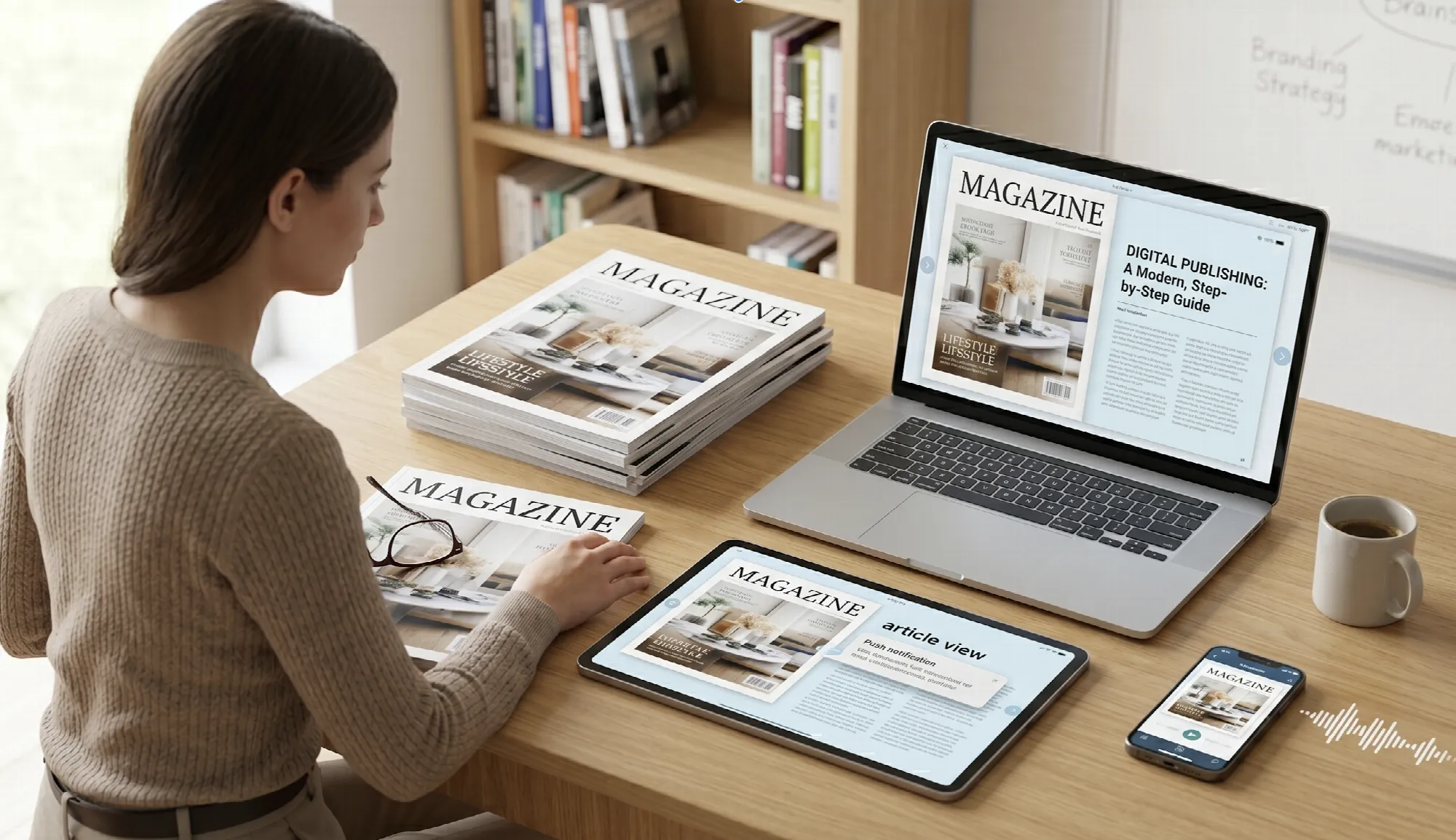
A modern magazine may exist as a printed issue, an e-paper, an app, a web edition, individual articles, audio, podcasts and interactive content. The challenge is to make those formats feel like one coherent product rather than a collection of disconnected channels.
The strongest digital magazine strategies keep the curated issue at the centre while giving readers more ways to read, listen, discover and return.
For publishers developing that experience, digital publishing for magazines is increasingly about connecting the issue with everything that can happen around it.
So what does the future of digital magazines actually look like – and what should publishers prioritise?
What does the future of digital magazines look like?
The future of digital magazines is likely to be hybrid, accessible and multi-format.
The magazine issue will continue to matter. Readers value the editorial selection, visual identity and sense of completeness that comes with a carefully produced edition.
But digital publishing gives publishers the opportunity to build around that issue.
Instead of asking readers to choose between the designed magazine and a mobile-friendly experience, publishers can offer both. Instead of limiting the relationship to the publication date, they can add articles, audio, podcasts, games and other experiences between issues.
The goal is not to make every magazine behave like a daily news site.
It is to make the digital magazine more useful in more situations.
1. Keep the edition – but make it easier to read digitally
One of the biggest questions for magazine publishers is how much of the traditional issue should remain in the digital experience.
The answer does not have to be either-or.
An e-paper or digital edition preserves the design, structure, advertising and editorial flow of the original magazine. For many readers, that complete, curated experience is still an important part of what makes a magazine a magazine.
But a page designed for print is not always the easiest way to read on a phone.
The same content can therefore also be made available in an article-based reading mode that adapts better to smaller screens and different reading situations.
A reader might prefer the designed edition on a tablet but switch to article view on a phone. The publication remains the same; the way it is consumed changes.
This combination of complete digital editions and flexible article reading is an important part of Prenly Reader.
Publishers thinking about the transition from print files to a richer reading experience can also read more about why modern e-paper publishing needs more than simple PDF or EPUB conversion.
2. Make the magazine available in apps and on the web
Readers do not all reach a magazine in the same way.
Some open a dedicated app. Others arrive through a browser, newsletter, search result or shared link.
A modern digital magazine therefore needs to work across different devices and entry points without feeling fragmented.
Apps can create a strong direct relationship with readers through a branded environment, saved access and push notifications.
The web provides another important route into the publication, allowing readers to access content without first downloading an app.
The two should complement each other.
A reader should recognise the same publication, content and brand whether they are reading on iOS, Android or the web.
That is one reason a modern digital publishing platform needs to support more than simply uploading a digital replica. It should connect publishing, distribution and the reader experience across channels.
3. Build a reader relationship that continues between issues
Weekly, monthly and quarterly magazines naturally create peaks in attention when a new issue is released.
But what happens afterwards?
For a monthly magazine, several weeks may pass before the next edition. For a quarterly title, the gap is even longer.
The readers' interest in the subject does not disappear during that time.
Digital publishing gives magazines an opportunity to remain relevant between publication dates without turning the editorial team into a daily newsroom.
A publisher might highlight an individual article, resurface valuable archive content, publish a podcast, send a relevant push notification or offer an interactive experience related to the magazine's subject.
That changes the reader journey from:
new issue → reading → waiting for the next issue
to something more continuous:
new issue → reading → discovering → listening → interacting → returning
The objective is not simply to increase publishing frequency. It is to create relevant reasons to return.
We explore this in more detail in How magazine publishers can keep readers engaged between issues.
4. Give readers the option to listen
Reading is no longer the only way audiences can consume magazine content.
Audio allows editorial content to fit into situations where reading is difficult or inconvenient – while commuting, walking, exercising or doing something else.
For publishers, audio can take several forms.
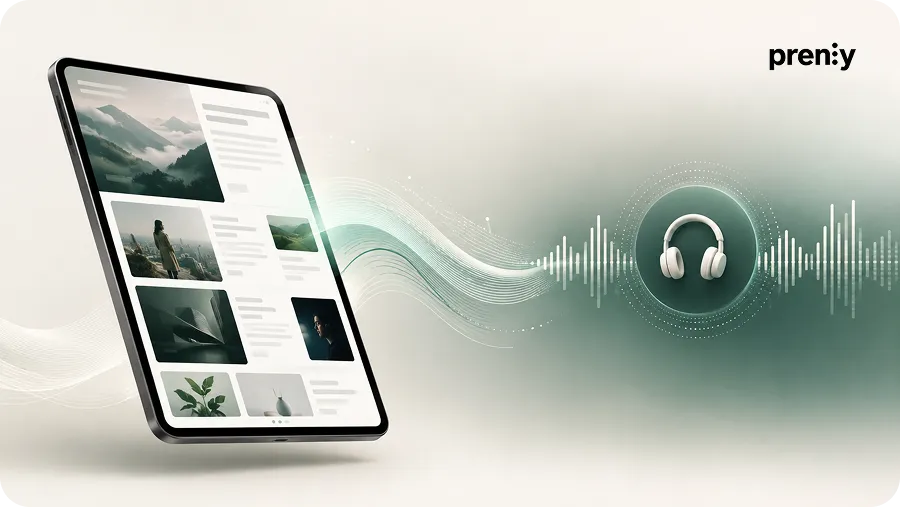
A long-form article can also be offered as spoken audio. An interview can become a podcast episode. A selection of recent stories can be packaged into an audio briefing. Existing podcasts can also become part of the magazine's own digital environment.
This does not necessarily mean creating an entirely separate audio operation.
Existing editorial content can often be adapted into another format.
Text-to-speech technology also makes it possible to turn written articles into natural-sounding audio at scale. Publishers interested in this area can read more about enhanced text-to-speech with ElevenLabs and Prenly.
The important shift is that audio does not have to sit outside the publication.
It can become another way to experience the same editorial brand.
5. Give readers something to do – not only something to read
The traditional magazine experience is largely one-directional: the publisher creates the issue and the reader consumes it.
Digital products can add another layer.
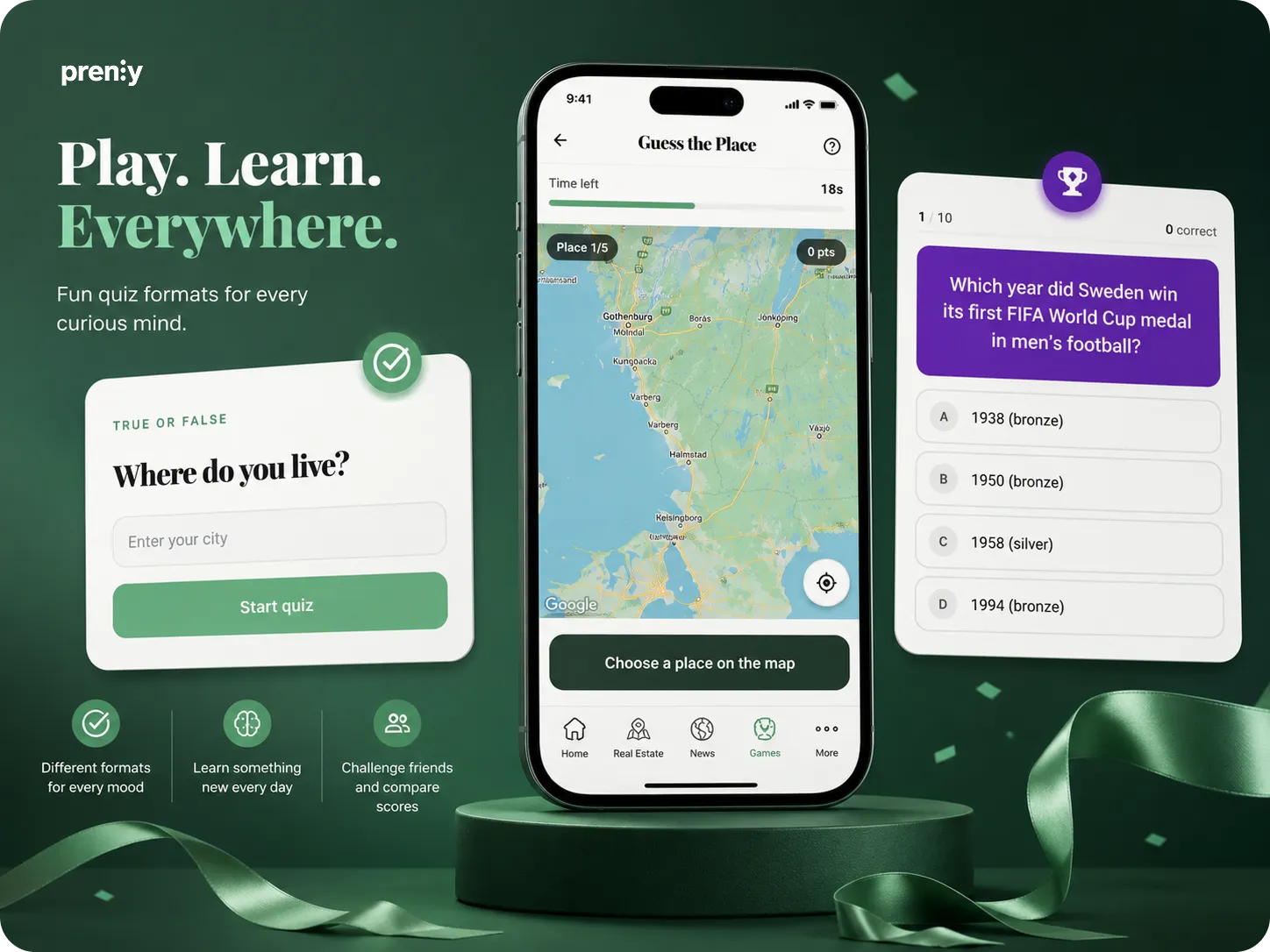
Games, quizzes, polls, competitions and other interactive formats can give readers something to do as well as something to read.
For specialist magazines, these experiences can be closely connected to the editorial subject.
A food magazine might create a quiz around ingredients or culinary traditions. A travel magazine could challenge readers to identify destinations. A history magazine might test readers on people or events. A trade magazine could build quizzes around developments within its industry.
The strongest interactive experiences are not random additions to the app.
They reinforce the expertise, subject and identity readers already associate with the magazine.
For example, Prenly Games allows publishers to add games, quizzes and competitions to the existing reader experience and create additional reasons for readers to return.
This broader idea is also central to Prenly Engage: extending the publication with experiences that complement the editorial content rather than forcing readers to move between separate platforms.
6. Use push notifications carefully
A magazine app creates something publishers historically had limited access to: a direct route back to the reader.
That makes push notifications powerful.
It also makes them easy to overuse.
A notification can be useful when there is a genuine reason to return, such as:
- a new issue
- an important article
- a new podcast episode
- a special edition
- a quiz or game
- an upcoming event
- a timely update
The important word is relevance.
If every new piece of content generates a notification, the channel quickly loses value.
Instead, push can become part of the editorial rhythm.
For a food magazine, that might mean highlighting a recipe collection before the weekend. For a business magazine, it could be a timely analysis. For a membership magazine, it might be an important update or upcoming event.
The aim is not simply to bring the reader back more often.
It is to bring them back when there is something genuinely useful, interesting or enjoyable waiting for them.
7. Treat accessibility as part of the reading experience
A digital magazine should offer more flexibility than simply reproducing a printed page on a screen.
Readers use different devices, have different needs and consume content in different situations.
Article-based reading, adjustable text, accessible navigation and text-to-speech can make editorial content easier to use for more people.
Accessibility is therefore not separate from the overall reader experience.
A reader may prefer the designed magazine on a tablet, article view on a smartphone and audio while travelling.
Another reader may need larger text or text-to-speech to comfortably access the same content.
The content remains the same, but the preferred way of experiencing it changes.
A flexible digital reading environment such as Prenly Reader allows the digital edition to remain central while giving readers additional ways to access the content.
8. Use digital to extend the life of magazine content
Magazine publishers often have something extremely valuable that can easily be overlooked in the race to create new content:
the archive.
Years of interviews, guides, specialist reporting, recipes, analysis, profiles and evergreen journalism may already exist.
Digital publishing creates more opportunities to bring that material back when it becomes relevant again.
Publishers can create:
- thematic collections from previous issues
- seasonal guides
- archive recommendations
- updated versions of evergreen articles
- audio versions of existing stories
- quizzes based on previously published content
- “best of” collections around a topic
A gardening magazine may have years of useful seasonal content.
A business magazine may have interviews and analysis that become relevant again when a company returns to the news.
A food magazine can resurface recipes based on seasons, holidays or ingredients.
The question changes from:
What can we publish today?
to:
What do we already have that is valuable to the reader today?
That is an important shift because the future of digital magazines is not necessarily about producing more.
It is also about getting more value from the journalism publishers have already invested in.
9. Do not rebuild the entire publishing workflow just to go digital
The future of magazine publishing is not only about what the reader sees.
It is also about what happens behind the scenes.
Established magazine publishers may already have editorial systems, print production workflows, subscriber databases, authentication systems, analytics tools and advertising solutions.
Launching or improving a digital product should not automatically mean replacing all of them.
Instead, the digital publishing platform should work with the systems that already make sense for the organisation.
That can include importing content from existing editorial or print workflows, connecting subscriber authentication, forwarding data to analytics tools and integrating other services through APIs or established content feeds.
Prenly Workspace is designed to bring publishing, packaging and distribution together, while Prenly can also integrate with existing editorial, authentication and analytics systems.
This matters because digital development becomes much harder when every improvement requires a major technology replacement project.
For many publishers, the better route is evolution rather than starting again from scratch.
Digital does not mean the end of print
Talking about the future of digital magazines does not mean that every publisher should stop printing.
For many magazines, print still has important qualities.
It can offer physical presence, strong visual impact, collectability and a premium reading experience.
The more useful question is therefore not:
Print or digital?
It is:
What should print do best, and what should digital add?
For some publishers, the printed magazine will remain the flagship product while the app and web experience extend its value.
Others may move further towards digital-first or fully digital publishing.
There is no single model that fits every magazine.
The right approach depends on the audience, editorial identity, publishing frequency, revenue model and existing workflows.
We look more closely at that decision in Print vs Digital vs Hybrid Publishing: What Works Best for Modern Publishers?.
What should magazine publishers prioritise next?
Publishers do not need to introduce every digital feature at once. A better starting point is to look at the current reader journey and identify where it stops.
- If readers only receive a PDF replica, article-based mobile reading may be the next improvement.
- If the magazine already has a strong digital edition but little activity between issues, reader engagement may be the bigger opportunity.
- If long-form journalism is difficult to consume on the go, audio may add more value.
- If readers struggle to access content comfortably, accessibility should move higher up the roadmap.
- If a magazine already has a highly engaged specialist audience, games, quizzes, events or other interactive formats may create new opportunities.
- If the publishing team spends too much time manually moving content between systems, the workflow itself may need attention.
A digital magazine strategy should solve real reader and publisher problems – not simply add more technology.
The future of magazines is a stronger combination of edition and experience
The magazine issue is not disappearing. Its strengths – curation, editorial identity, visual storytelling and focus – remain valuable.
What is changing is everything that can exist around it.
A digital magazine can preserve the complete edition while also offering article-based reading.
- It can live in an app and on the web.
- It can be read or listened to.
- It can give readers reasons to return between issues.
- It can make years of existing content useful again.
And it can do all of this without forcing the publisher to abandon the systems and workflows that already work.
That is where the future of digital magazines becomes more interesting. Not as a replacement for the magazine, but as an extension of what the magazine can be.
Prenly is a digital publishing platform for newspapers, magazines and media companies, bringing publishing workflows, digital editions and reader experiences together.