


Other articles by Lena
-
How to Turn a Print Newspaper into a Digital Edition
1 Sep 2026
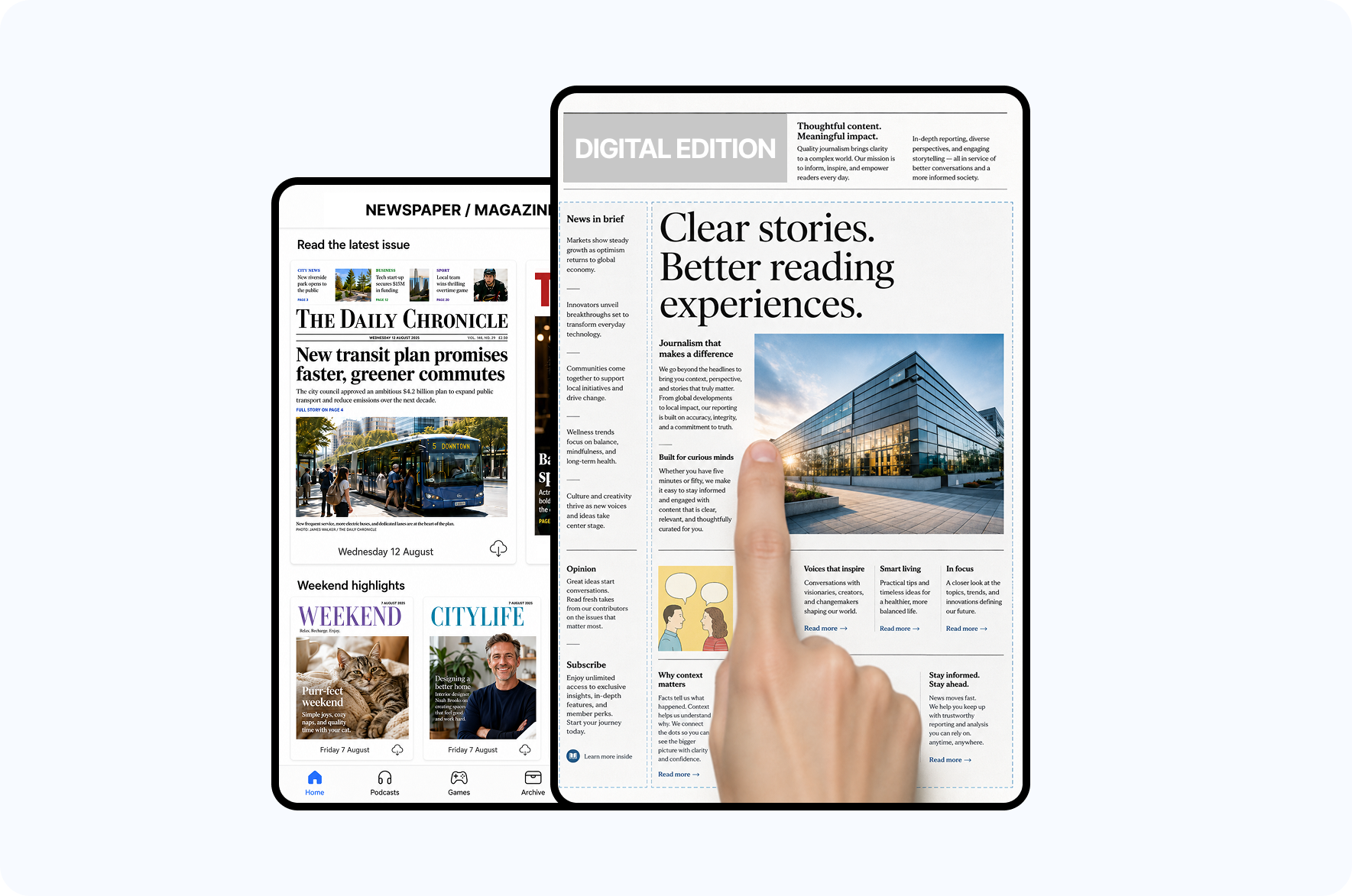
Taking a print newspaper digital involves more than simply putting a PDF online.For many readers, the newspaper experience itself matters: a clearly defined edition, the editorial selection, the structure of the pages and the feeling of reading from beginning to end. At the same time, the digital version needs to work well on smaller screens, be accessible to more readers and meet today’s expectations for digital content. A modern e-paper can combine the best of both worlds. What is a digital newspaper or e-paper? An e-paper is a digital version of a newspaper or magazine that readers can access on a smartphone, tablet or the web. It can preserve the layout and structure of the printed publication while adding features designed specifically for digital reading. This means publishers can retain the familiar edition-based newspaper experience while making the content easier to read and use digitally. For newspapers looking to improve their digital reading experience, the existing print edition can therefore be a natural starting point. The same applies to magazines looking to combine print and digital publishing. A PDF is a good starting point – but not the complete reading experience Many newspapers and magazines already produce a finished PDF as part of their regular publishing workflow. This makes the PDF a natural starting point for a digital edition. The problem arises when the PDF also becomes the entire reading experience. A full newspaper page may work well on a large screen. On a smartphone, however, readers often have to zoom, pan and move around the page just to read the text. A modern digital newspaper should therefore offer more than a static copy of the printed page. Keep the print experience – and give readers a digital reading mode Publishers do not have to choose between the traditional newspaper experience and an entirely new digital format. A digital edition can allow readers to view the newspaper exactly as it was published while also giving them the option to open articles in a reading mode designed for smaller screens. This gives readers the freedom to choose how they consume the same content. Those who enjoy the traditional newspaper experience can browse the edition page by page, while readers on smaller screens can switch to a more mobile-friendly article view. Make your newspaper accessible to more readers Digital publishing also creates new opportunities to make content more accessible. For example, readers can access article content as text rather than only as an image of the printed page, adjust the text size or use text-to-speech to listen to articles. For publishers, this means the same journalism can work for more people and in more situations. With Prenly Reader, e-papers and other editorial content can be brought together in a modern and accessible digital reading experience for iOS, Android and the web. Publish the same newspaper in apps and on the web Readers use different devices at different times. A digital newspaper should therefore not be limited to a single screen or channel. With Prenly, newspapers, magazines and media groups can create, package and distribute e-papers and digital editions through one streamlined publishing workflow – from editorial content to apps and the web. Readers can access the publication wherever it suits them best, while publishers reduce the need to build and maintain separate publishing workflows for every channel. A digital newspaper can offer more than the print edition Taking a newspaper digital does not mean the digital product has to be limited to the content that appeared in print. In Prenly Reader, the e-paper can be combined with other types of editorial and digital content, including: articles podcasts and audio games crosswords video web content This allows publishers to preserve the strengths of a curated edition while creating a broader digital reading experience and giving readers more reasons to return. What should a modern digital newspaper be able to do? When taking a print newspaper digital, it is worth looking beyond the file conversion itself. Preserve the newspaper layout Readers should be able to recognise and browse the published edition with the same editorial structure and visual identity as the printed newspaper. Work well on mobile Articles and other content need to remain easy to read even when a full newspaper page is too large for the screen. A dedicated reading mode makes it possible to read the same content on smaller devices without constantly zooming and panning. Make content accessible to more people Different readers have different needs. Features such as reading mode, adjustable text size and text-to-speech can make content easier to access and consume. Publish across multiple platforms The digital edition should work on smartphones, tablets and the web without requiring the editorial team to create separate versions for each channel. Combine different types of content A digital reading experience can combine e-papers with articles, audio, podcasts, video, games, crosswords and other editorial content. Fit into the existing publishing workflow Digital publishing should not have to create more manual work. A modern publishing platform should work with the editorial systems and workflows a publisher already uses. Print and digital do not have to be two separate products For many established publishers, the printed newspaper remains an important part of the offering. Digital publishing does not therefore have to mean replacing print. Instead, the digital edition can build on what already works: the editorial selection, the publication’s identity and the curated edition. Apps and the web can then give readers more ways to access the same journalism, at more times throughout the day. This makes it possible to create a hybrid model in which print and digital publishing strengthen each other rather than being treated as two separate strategies. From print newspaper to a complete digital reading experience The printed newspaper has many qualities that remain valuable in a digital environment: editorial curation, the structure of an edition and the sense of a clear beginning and end. The goal does not have to be to replace that experience. Instead, publishers can take the best parts of the printed newspaper and use digital technology to make them easier to read, more accessible and easier to develop further. Prenly helps newspapers and magazines create and distribute digital editions and bring them together with other editorial content across apps and the web. To see how other publishers use Prenly, explore our customer stories and examples from newspapers and media groups. Explore Prenly’s digital publishing solutions → Frequently asked questions about taking a print newspaper digital How do you turn a print newspaper into a digital newspaper? A print newspaper can be turned into a digital publication by using the finished edition as the basis for an e-paper and adding digital features such as article view, reading mode, adjustable text size and text-to-speech. The digital edition can then be distributed through apps and the web. Can a PDF newspaper be made mobile-friendly? Yes. The original newspaper layout can be preserved while the article content is also made available in a reading mode designed for smaller screens. What is the difference between a PDF and an e-paper? A PDF primarily reproduces the finished page. A modern e-paper can combine the original edition with features and reading modes designed for digital use, such as article view, text-to-speech and adjustable text size. Can a digital newspaper work in both an app and on the web? Yes. With Prenly, digital newspapers and other editorial content can be made available to readers across iOS, Android and the web. Can an e-paper include content that is not in the printed newspaper? Yes. The digital reading experience can be expanded with articles, podcasts, audio, video, games, crosswords and web content. Does the editorial team have to change its existing workflow? Not necessarily. Prenly is designed to work with existing editorial systems and publishing workflows, allowing digital publishing to become a natural part of day-to-day production. Does an e-paper also work for magazines? Yes. The same principles apply to magazines and other periodical publications. The finished edition can be combined with a digital reading mode and enhanced with articles, archives, audio, podcasts and other content between editions. Learn more about digital publishing for magazines.
-
Visualize Google Analytics Data with Looker Studio
27 Jul 2026
Looker Studio is Google’s reporting tool for creating interactive dashboards and visual reports. By connecting it to Google Analytics, you can turn raw analytics data into easy-to-understand charts and reports that help you understand how readers interact with your content. You can create and maintain your own Looker Studio dashboard, or Prenly can set it up for you as a paid service. What is it used for? Google Analytics collects a large amount of data, but finding the right information can be time-consuming. Looker Studio presents your analytics in a visual dashboard, making it easier to monitor trends, share insights, and understand how your publication is performing. A typical Prenly dashboard includes insights such as: App opens and unique readers Reading time and reader engagement Most viewed pages and articles Reader activity throughout the day Devices and operating systems Geographic distribution of readers Push notification performance Advertisement impressions and clicks (if applicable) These insights can help you better understand your audience, improve your content strategy, and provide valuable data to advertisers and stakeholders. How is it implemented? Before a Looker Studio dashboard can be created, Google Analytics must already be configured for your Prenly application. Here is how it works → If you choose Prenly’s setup service, we ask you to: Invite dev@prenly.com to your Google Analytics property. Let us know who should receive the dashboard template. We will then: Configure the dashboard template. Connect the required metrics and visualizations. Share the template with you. To ensure that you remain the owner of the report, you will then: Create your own copy of the shared template. Connect the correct Google Analytics property (if you have more than one). Grant dev@prenly.com administrator access to your copied report so we can complete the configuration. Note: Only the owner of a Looker Studio report can connect a data source. Creating your own copy ensures that you retain full ownership of the dashboard while still allowing us to configure it for you. Technical details Looker Studio requires an existing Google Analytics property as its data source. Without Google Analytics, no data can be displayed in the dashboard. The standard Prenly dashboard includes statistics from your iOS app, Android app, and web reader. If you would like us to set up a Looker Studio dashboard for your publication, have questions about the setup process, or would like pricing information, please contact hello@prenly.com.
-
Enhanced Text-to-Speech in Prenly | ElevenLabs & AI Voices
27 Jul 2026
Enhanced Text-to-Speech converts your written articles into natural, human-like audio using voices from third-party text-to-speech providers. Once activated, audio is automatically generated for new publications, allowing readers to listen to articles instead of reading them. This makes your content more accessible and offers an additional way for readers to enjoy it.What is it used for? Enhanced Text-to-Speech uses voices from supported text-to-speech providers instead of the standard voices built into browsers and mobile devices. These voices sound more natural, with improved pronunciation, rhythm, and intonation, creating a better listening experience. You might choose Enhanced Text-to-Speech if you want to: Make your content more accessible. Give readers the option to listen to articles instead of reading them. Improve audio quality, particularly for languages where standard device voices are limited How is it implemented? To activate Enhanced Text-to-Speech, you first need an account with one of our supported text-to-speech providers. Once you have created your account and obtained the required credentials, send them to hello@prenly.com and we will configure the integration for your publication. You can compare available voices and find setup instructions for the supported providers on their respective websites. Prenly currently supports: Microsoft Azure Voice Gallery Google Cloud Text-to-Speech Amazon Polly Voices ElevenLabs Narakeet The exact credentials depend on the provider you choose. In general, you will need to provide: Voice (for example, en-US-JennyNeural) Speech key, API key, or JSON key file (depending on the provider) Region Language Voice gender After the integration has been configured, continue uploading your publications to Webarch as usual. Audio is then generated, imported, and made available automatically. Be aware: Only publications uploaded after the integration has been activated will include enhanced audio. Existing publications are not processed automatically. Technical details The quality of generated audio depends on the selected text-to-speech provider and voice. Some providers calculate character usage based not only on the article text but also on additional markup used for language and voice settings. This may affect the number of billable characters. If you would like to activate Enhanced Text-to-Speech for your publication, have questions about the setup, or would like pricing information, please contact hello@prenly.com.
-

Berliner Zeitung: E-Paper Migration | Prenly
4 Feb 2026
When Berliner Verlag decided to strategically further develop its platform, the requirements were clear: the transition needed to be fast and reliable – without disrupting ongoing production or putting subscriber access at risk. Berliner Verlag chose Prenly to partner with an established provider offering a continuously evolving product, without triggering a lengthy large-scale IT project.Carrying out a technical platform migration in the middle of day-to-day operations is a challenge. For Berliner Verlag, the goal was to implement the migration “while operations continued” for its titles Berliner Zeitung, Berliner Kurier, and Weltbühne – without losing momentum. At the same time, the groundwork needed to be laid for the launch of the “Ostdeutsche Allgemeine Zeitung,” the new nationwide project of Ostdeutsche Medienholding.The editorial teams needed to maintain their existing workflows, subscribers should be able to keep their login credentials, and all issue content had to be transferred seamlessly – including elements that are not always part of standard CMS data streams. The solution: Existing workflows in –> a modern app out Prenly made it possible to work directly with the sources already in place. Content from print production, optimized for the app: Using the same technology applied in the sister product Webarch, Prenly was able to structure PDF print data into a format perfectly suited for the article reading mode in the app. The complete issue included: This approach ensured that content often missing from traditional editorial workflows – such as fully laid-out elements or externally produced material – was also included in the digital edition. Flexibility for the future: Berliner Zeitung was able to launch as a productive pilot using its current workflow, while retaining the freedom to later switch to – or complement it with – direct delivery from the CMS via XML/API. The same applies to all other titles within the publishing group. “Prenly structured the onboarding process extremely well and understood our technical requirements from the very beginning. Adjustments were implemented quickly and pragmatically, and the collaboration between the teams was consistently professional and partnership-driven – even under tight deadlines and across countries and language barriers.” – Berliner Zeitung How it works Subscribers and login: Through the Prenly Remote API, Berliner Zeitung’s developers connected the existing subscription system directly with the app. Accounts and permissions continue to be managed in legacy systems, ensuring a seamless transition for readers without interruption. The publisher controls the content: Using the Prenly Workspace, the newspaper defines the mix within the app – such as e-paper, web news, podcasts, and text-to-speech (via Microsoft Azure) – as well as their order and prioritization. Web and native in one seamless experience: When combining web content with native feeds, the Prenly JS Bridge is used. This makes web views feel like a natural part of the app. The result Berliner Zeitung was able to switch platforms in a very short time without having to launch a major internal technology project. It secured its daily publishing operations while simultaneously laying the foundation for a modern app where multiple formats can be brought together and developed further at its own pace. All additional titles from the publisher are currently being migrated. These migrations are expected to be completed within the first quarter of 2026, highlighting the flexibility of Prenly’s solutions. Facing a similar migration? Get in touch with us, and we’ll show you what a transition could look like for your organization.Visit Berliner Zeitung here
-
Accessibility statement for Prenly
8 Jan 2026
Accessibility statement for Prenly Introduction At Textalk, we work to ensure that our platform is as accessible as possible for all users. This accessibility statement describes which parts of the platform do not meet accessibility requirements, as well as how we work to identify and correct accessibility issues. The statement covers the platform itself, for example: The web application https://thisis.prenly.com/ The iOS application Prenly (https://apps.apple.com/us/app/prenly/id6736682103) The Android application Prenly (https://play.google.com/store/apps/details?id=com.prenly.thisis) Platform and customer adaptations The platform strives to follow applicable European accessibility standards, but some parts do not yet fully meet the requirements. Customers can for example customise the platform according to their brand colours, which may affect accessibility. Another example is alt text: the platform enables alt text, but customers are responsible for providing it. We offer guidelines and support to help customers maintain or improve accessibility in their customised versions of the platform. Digital accessibility status Platform Compliance level Comments / Key issues Website (base version) Partially compliant A few issues regarding headings, screen reader navigation, and text presented as images. iOS app (base version) Partially compliant A few issues, including with external keyboards. Android app (base version) Partially compliant A few issues, including with system text size settings. Customer versions (customised) ⚠️ Varies Accessibility depends on colour choices, alt text, etc. We provide guidance. Technical details and testing The technical foundation of the platform has been tested against: WCAG 2.1 levels A and AA EN 301 549 (relevant for the European Accessibility Act, EAA) Test methods Automated tests using axe DevTools, Lighthouse, and Wave Evaluation Tool on the web application Manual keyboard navigation testing – all platforms Manual contrast testing – all platforms Manual testing with screen readers – focus on the web application, partial testing with VoiceOver and Voice Control on iOS Limitations Accessibility issues may occur in: Customer colour choices and layout modifications Customer-provided content (e.g., images without alt text, non-descriptive link texts, videos without captions, advertising material, text that is not easy to read) Features, integrated systems, or third-party components outside our direct control (e.g., consent dialogs, login systems, embedded web views) Mobile applications that are not running the latest version. Planned improvements We continuously work to improve the accessibility of the platform’s core functionality. Ongoing or planned measures include: Improvements for screen readers in the web application Support for system settings for dark/light mode (Android and iOS) Support for system settings for larger text sizes (Android) The next major review is planned for 1 November 2026 or in connection with major updates. Content that is not fully accessible Applies to Web, iOS, and Android Views with images of entire newspaper pages Some views contain images of full newspaper pages. According to guidelines, text should be presented as real text, not images. These images are used only as a visual representation. All text that customers define as editorial content is available in a simplified reading mode when the publication is opened. Heading levels in replica mode Replica mode lacks a main H1 heading, which affects structure and semantics for screen readers. However, this is not deemed to impact understanding of the content in reading mode. Error message during login When an incorrect password is entered, the message “Incorrect login details” is shown. It is not fully descriptive according to accessibility requirements, but more detailed information is not provided for security reasons. Archive page and pagination More publications load automatically as the user scrolls, by design. Pagination would not improve usability due to archive sizes (sometimes 100+ years). Publications are displayed in chronological order, and filtering and date/title search are available. Podcasts Some customers include podcasts; these are presented without transcripts, meaning the content is only accessible via audio. Article audio may also be used, however this content usually matches the written text. Links on the start page Some components use links (for example to multiple issues, archives, or podcasts) which rely solely on colour to indicate link functionality. Applies to iOS and Android Archive page – search field The search field is a native component that lacks a visible “Search” button and therefore has no visible text label indicating a voice command. However, the search functionality works with common generic Voice control prompts such as “enter that”, and there is a Search button in the keyboard navigation. Applies to iOS External keyboards Some assistive functionality is switched off due to a large number of previously reported crashes on iPads connected to external keyboards. Switching off these functions has improved stability and lowered the amount of crashes significantly. Applies to Android Article reading mode There is no button to enter article reading mode when viewing a PDF/replica. Keyboard-only navigation cannot access reading mode. Applies to Web Screen readers with Mozilla Firefox Article boxes cannot be opened to access the reading mode when using Firefox in combination with a screen reader. This works with other browsers. Screen readers in zoomed-in mode At browser zoom levels above 115%, the screen reader menu option becomes hidden. “Skip to content” There are currently no “Skip to content” links. Missing screen reader notification in search filtering When search results are filtered in narrow browser views, the filter panel covers the results. Applying filters updates the search results in the background, but no notification is provided to screen reader users. When the filter panel is closed and the updated results are shown, the change is still not announced. Report issues and contact details If you discover additional accessibility issues or want to provide feedback, please contact us: Email: hello@prenly.com Phone: +46 31-388 47 40 If you are not satisfied with our response, you may contact the Swedish Post and Telecom Authority (PTS). More information: https://www.pts.se/digital-inkludering Review and Updates This statement is updated at least once per year or in connection with major changes. Last updated: October 2025
-
Annotate links in Webarch imported issue
24 Oct 2025
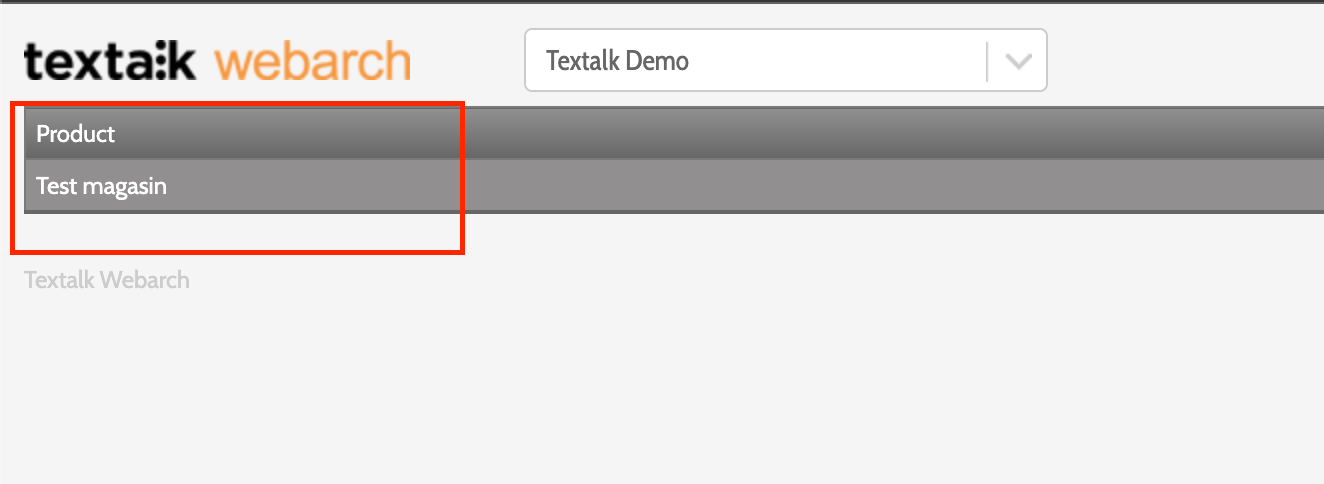
One way to annotate a link (text or article linked to an external URL link) is to do it directly in Webarch. Here we easily show you how it is done in the system (should you not have the right rights to do so, please contact hello@prenly.com so that we can help you) 1. Log in to: https://prenly.webarch.se/ 2. Click on the title (if you have several titles, select the one you want to change) 3. Upload the issue that is to be edited; or if it is already imported click on the red field "Not finished" to enter the issue. 4. Once inside Webarch, unless there is already a "picture box" on the text you want to annotate, click on "Box Editor" and then "start editing". Here you now need to drag an "image box" over the text you want to add an URL link to so that a red box is created. When you are done with the box click "save". 5. Once you have saved the "image box", it will change colour to yellow and then light blue. 6. Right-click on the image box and select "Edit external link" in the box that appears. 7. In the pop-up box "External link" paste the URL link you want to add to the text and then click "Ok". 8. When the link is inserted and saved, a "green box with an arrow" appears, indicating that this article has now been correctly annotated with a URL link. Ps. Annotated links via Webarch appears in the PDF mode of the magazine. Now you can exit the issue and let our operators handle it and as soon as it is ready it will be exported to Prenly!
-
IP-based access
24 Oct 2025
With IP-based access, users can read the e-newspaper without needing to log in — as long as they are connected to a network with an approved IP address. This is a convenient solution for places like companies, schools, or hotels where multiple users need access from the same location. How it works: - A list of IP addresses is provided to Prenly Support.- The list is linked to one or more subscription packages in Prenly.- All users connected to the specified network get automatic access to the e-newspaper — no login required. IP-based access is an add-on service, and the cost depends on how many IP addresses are included. ? Want to know more or get started with IP-based access? Contact Prenly support, hello@prenly.com
-
Application Settings
24 Oct 2025
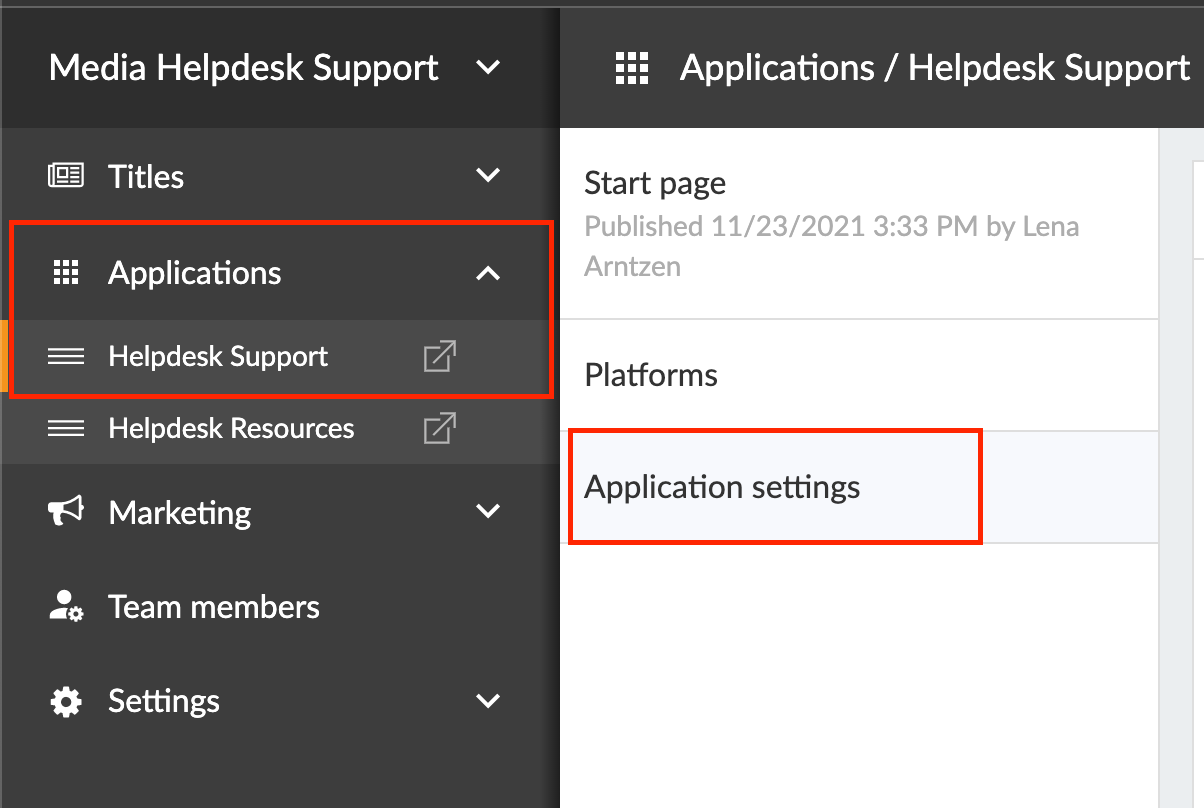
This guide walks you through the Application Settings you can set for each of your titles in Prenly. These settings let you control how a title behaves in your app — for example whether readers can download it as a PDF in the web reader, share articles or spreads, see it in the archive, or access it only with a subscription. Keep in mind that these options are set per title and per application. That means the same title can have different settings in different apps. Go to Applications -> Application settings -> Select title to edit by clicking on the "pen" in the right corner. 1. Should the title be in the archive? This setting controls whether the title appears in the app’s archive: Yes, preselected shows it automatically, Yes, non-preselected keeps it available in the filters but not shown until activated, and No hides it from the archive. 2. Allow automatic download for the title The Allow automatic download for the title setting decides if readers can automatically download this title for offline use, and whether it’s selected by default. You can set it to Yes, preselected so it’s automatically chosen when users enable Automatic Download, Yes, but not preselected so users must select it themselves, or No to prevent this title from being available for automatic downloading at all. 3. Allow PDF download? Allowing PDF downloading means that the user can download the title to their device. Valid only via Prenly Web reader. 4. Allow article sharing? Choose whether you want to allow your users (readers) to share articles unlimited, limited or not at all. 5. Allow sharing of spreads? Choose whether you want to allow your users (readers) to share posts unlimited, limited or not at all. 6. Should the title require a subscription or be available to everyone?Here you can set whether the e-magazine is subscription locked or open to everyone. You can also choose to let older issues become publicly available automatically after a set number of days. Select Available after XX days and set the preferred amount of days. 7. Should the title be searchable in the archive? Enable this option if readers should be able to find search results for this title when entering keywords in the archive. Don't forget to click the save button so that the changes are saved and take effect on the apps!
-
Schedule a component
24 Oct 2025
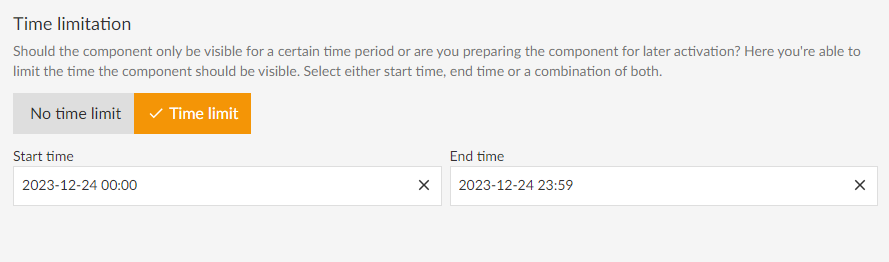
Did you know you can schedule a component on the home page? Perfect when you need to prepare a banner, carousel or similar to be displayed on a specific date. Or maybe you just want to publish a greeting to your readers on a specific holiday when fewer people work? How to do this 1. Open an existing component or create a new one.2. Scroll down to the Time Limitation section3. Select Time limit4. Select only start time, only end time or both.5. Click on update6. Don't forget to save and publish with the green button.
-
Change width of startpage
24 Oct 2025
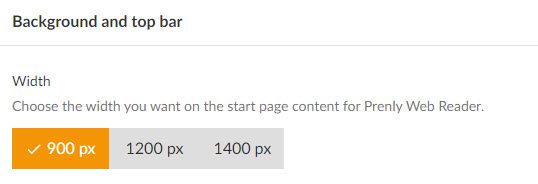
Now you can change the width of the homepage content for Prenly Web Reader. 1. Log in at https://content.textalk.se/ 2. Select the application for which you want to change the width. 3. Click on the tab "Start page" 4. Scroll down to the "Background and Top bar" section. 5. Choose width between 900-1400px and save.
-
Change color theme in the web app
24 Oct 2025
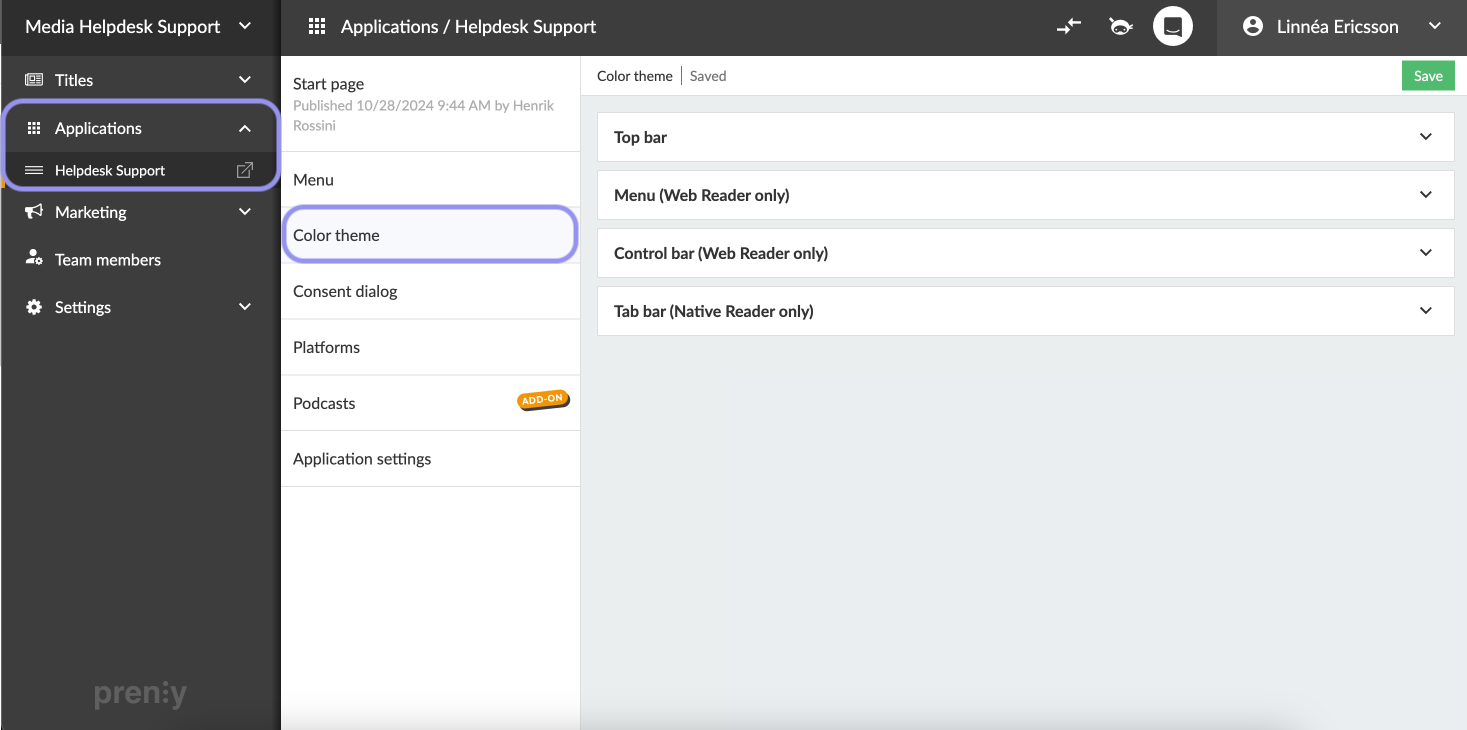
Easily adjust the color theme to match your brand on both web and mobile (iOS & Android), for both light and dark mode. You configure your colors in Prenly Workspace in two places: Color Theme and Start page. Settings made on Start page apply only to the start page, while settings made under Color Theme apply to the entire app. We’ll start with Color Theme. Log in to Prenly Workspace and select Applications, then choose the application you want to modify. Click Color Theme to display the color settings. Here you will find five categories: Top Bar - Change the color for both web and mobile apps Menu - Web only Control Bar - Web only Navigation Bar - Mobile app only Podcast - Change colour of premium labels for both web and mobile apps Buttons and Links – Both web and mobile apps In the color settings, you will find a color picker where you can choose which color to use in light mode and dark mode. Choose color theme per area. If choosing Custom theme you can experiment with the color selector. Next, go to Start page. Here you will find all your home page components. Each component includes color options such as background, text, and heading colors. Click on any component and scroll down to Appearance. There you will find a color picker where you can choose which color to use in light mode and dark mode. For components where you can upload image files, such as the Banner component, you can also choose whether to use the same image in both light mode and dark mode, or upload a separate image specifically for dark mode. Below the components, you will find Background and Top Bar. There you can configure colors using a color picker for both light mode and dark mode. You can also upload a Logotype that will appear in the top bar on the Home page. If you upload a logo, it will be used in both light mode and dark mode, or you can choose to upload a separate one for dark mode. Remember to click Save when you are done. Don't miss our Color Contrast Checker tool which helps ensure your color choices provide enough contrast so text and elements remain clear and easy to read.
-
Digital Accessibility Guidelines in Prenly Workspace
24 Oct 2025
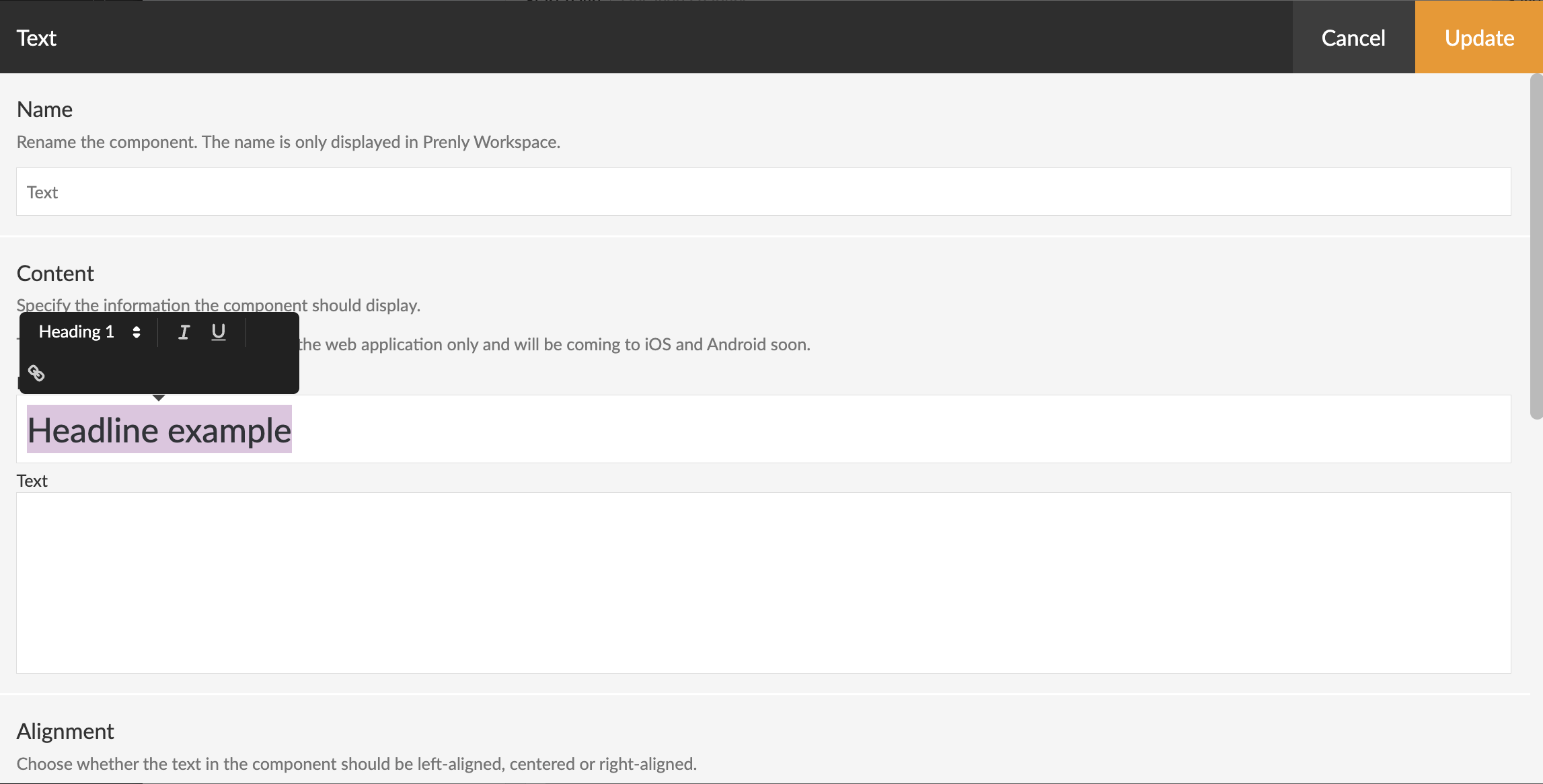
Digital accessibility is important from several perspectives, and many people benefit from applications being as accessible as possible.This can include situations when you use tools such as screen readers or a keyboard, but also, for example, when you're standing in sunlight with your phone and can't see the screen properly, or when you're carrying something and only have one hand free to operate your device.There are general guidelines for digital accessibility: the Web Content Accessibility Guidelines (WCAG).To comply with these, there are certain things you need to ensure in Prenly Workspace.With the help of Prenly Workspace, you have the opportunity to adjust your settings to meet these guidelines.Headline on the start pageYour start page needs a headline that clearly describes the content of the page.The first heading must be a Heading 1, representing the top heading level. This benefits both sighted users and those who use assistive technologies such as screen readers.Add a text component at the top of the start page in your application, set a headline, and make sure it is a Heading 1.You choose the heading level by selecting the heading text and then choosing the desired heading level. Screenshot from Prenly Workspace showing how to set the heading level.Alternative image text for banner componentsAll banner components on the start page need alternative text (alt text) to enable visual description of the image.In the banner component, there is a field labeled “Image alternate text” that you should fill in. Screenshot from Prenly Workspace showing where the 'Image alternate text' field is located.Colors and contrastThere are many colors you can adjust to visualise the applications in line with your brand.Make sure that the color contrasts are sufficiently high — for example, between background color and button color, or background color and text.There are different accessibility requirements for elements such as headings and body text, to ensure that as many people as possible can distinguish the information. You can adjust the colors in Prenly Workspace.• For each start page componentYou can find the setting by selecting Applications in the left-hand side menu, then selecting your application and the middle menu option Start page.Choose to edit the desired component—either by clicking the component name in bold text or by using the three-dot menu and selecting Edit.Scroll down to the Appearance section.• Under ‘Color Theme’You can find the setting by selecting Applications in the left-hand side menu, choosing your application, and then selecting Color Theme in the middle menu.Then choose Custom Theme for each color theme category to set your own color.For each color selection you make, a so-called HEX code is generated, which you can see when you click on a color box. Screenshot from Prenly Workspace showing an example of where the HEX code is displayed.There are different ways to test contrast. We have a dedicated tool for Prenly: Color Contrast – Accessibility Check.There is also a general tool available from webaim.org: WebAIM: Contrast Checker.Link copyIt's possible to adjust the link copy on some start page components. The copy should be descriptive, to ensure the user understands what will happen if they click the link. As an example 'Read more' is not recommended, but 'Open archive' is a better option.This is especially important for users with screen readers.If you have any questions, feel free to contact us.
-
Add video to article
24 Oct 2025
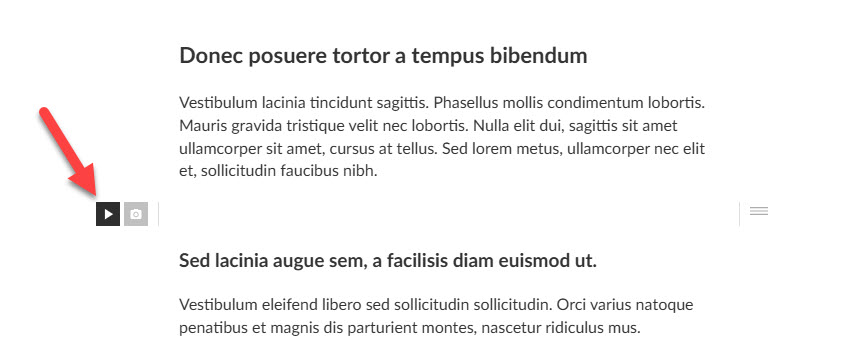
Here's how to add a video to an article in Prenly Workspace. 1. Log in to Prenly Workspace 2. Select an existing publication (that contains articles) or create a new article 3. Choose to edit an existing article or create a new one 4. Create a new paragraph and click the video icon ▶️ (see image). Click on the video icon 5. Paste the Youtube URL in the field for the video you want to add. In some cases, you can also paste an embed code. If you use Youtube Shorts, for example, there is no option to copy an embed code by default. However, there is a workaround so that you can generate such a code. Just replace the word shorts in the link with watch. Then go to the link to find the embed code as on regular Youtube clips. For example https://www.youtube.com/shorts/{video-id} will then become https://www.youtube.com/watch/{video-id} If everything works, you should see your video rendered in the article like the example video below. You can adjust the width via the icons above the video. Good luck!