How to Turn a Print Newspaper into a Digital Edition | Prenly
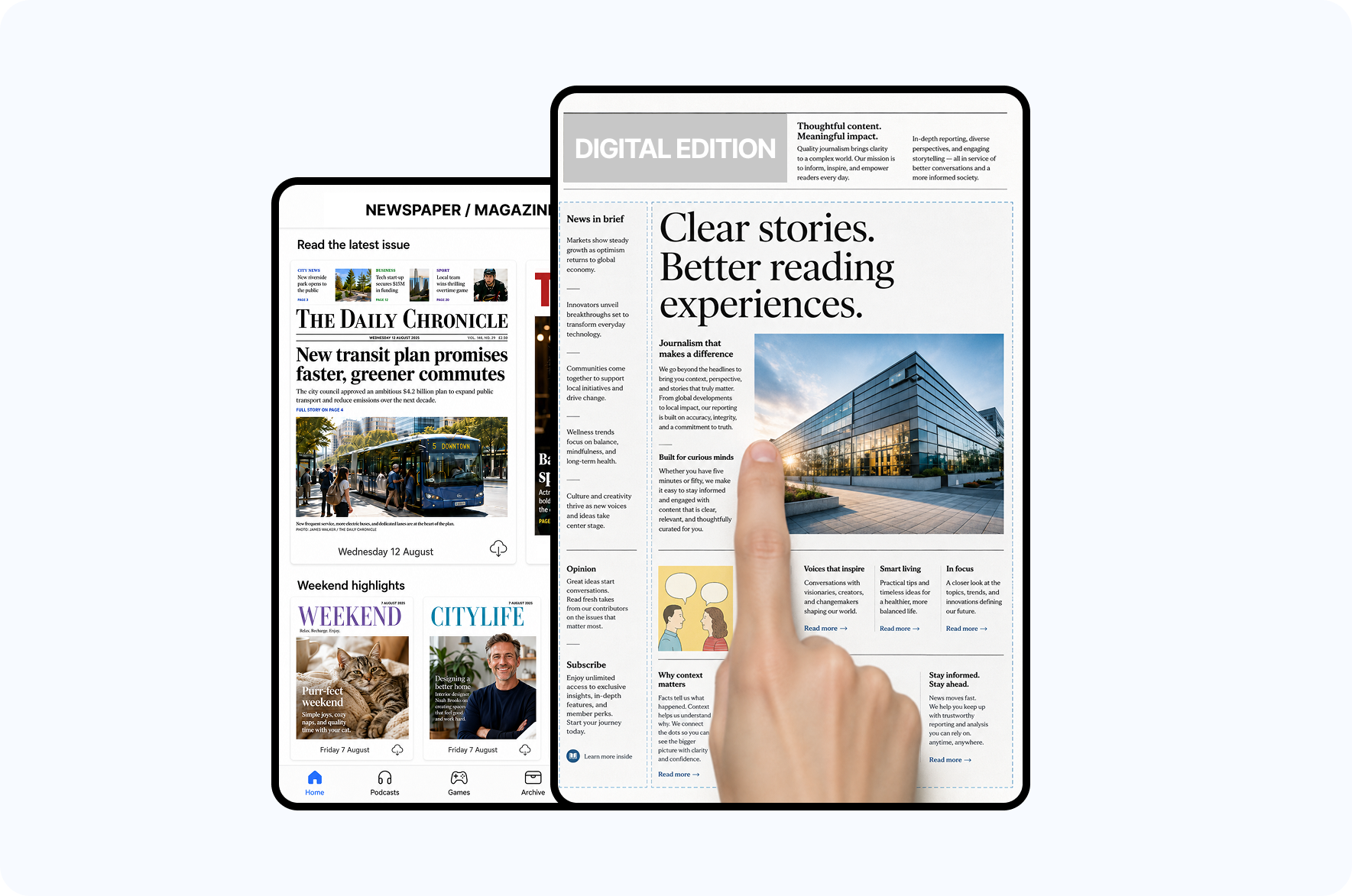
For many readers, the newspaper experience itself matters: a clearly defined edition, the editorial selection, the structure of the pages and the feeling of reading from beginning to end. At the same time, the digital version needs to work well on smaller screens, be accessible to more readers and meet today’s expectations for digital content.
A modern e-paper can combine the best of both worlds.
What is a digital newspaper or e-paper?
An e-paper is a digital version of a newspaper or magazine that readers can access on a smartphone, tablet or the web.
It can preserve the layout and structure of the printed publication while adding features designed specifically for digital reading.
This means publishers can retain the familiar edition-based newspaper experience while making the content easier to read and use digitally.
For newspapers looking to improve their digital reading experience, the existing print edition can therefore be a natural starting point. The same applies to magazines looking to combine print and digital publishing.
A PDF is a good starting point – but not the complete reading experience
Many newspapers and magazines already produce a finished PDF as part of their regular publishing workflow. This makes the PDF a natural starting point for a digital edition.
The problem arises when the PDF also becomes the entire reading experience.
A full newspaper page may work well on a large screen. On a smartphone, however, readers often have to zoom, pan and move around the page just to read the text.
A modern digital newspaper should therefore offer more than a static copy of the printed page.
Keep the print experience – and give readers a digital reading mode
Publishers do not have to choose between the traditional newspaper experience and an entirely new digital format.
A digital edition can allow readers to view the newspaper exactly as it was published while also giving them the option to open articles in a reading mode designed for smaller screens.
This gives readers the freedom to choose how they consume the same content. Those who enjoy the traditional newspaper experience can browse the edition page by page, while readers on smaller screens can switch to a more mobile-friendly article view.
Make your newspaper accessible to more readers
Digital publishing also creates new opportunities to make content more accessible.
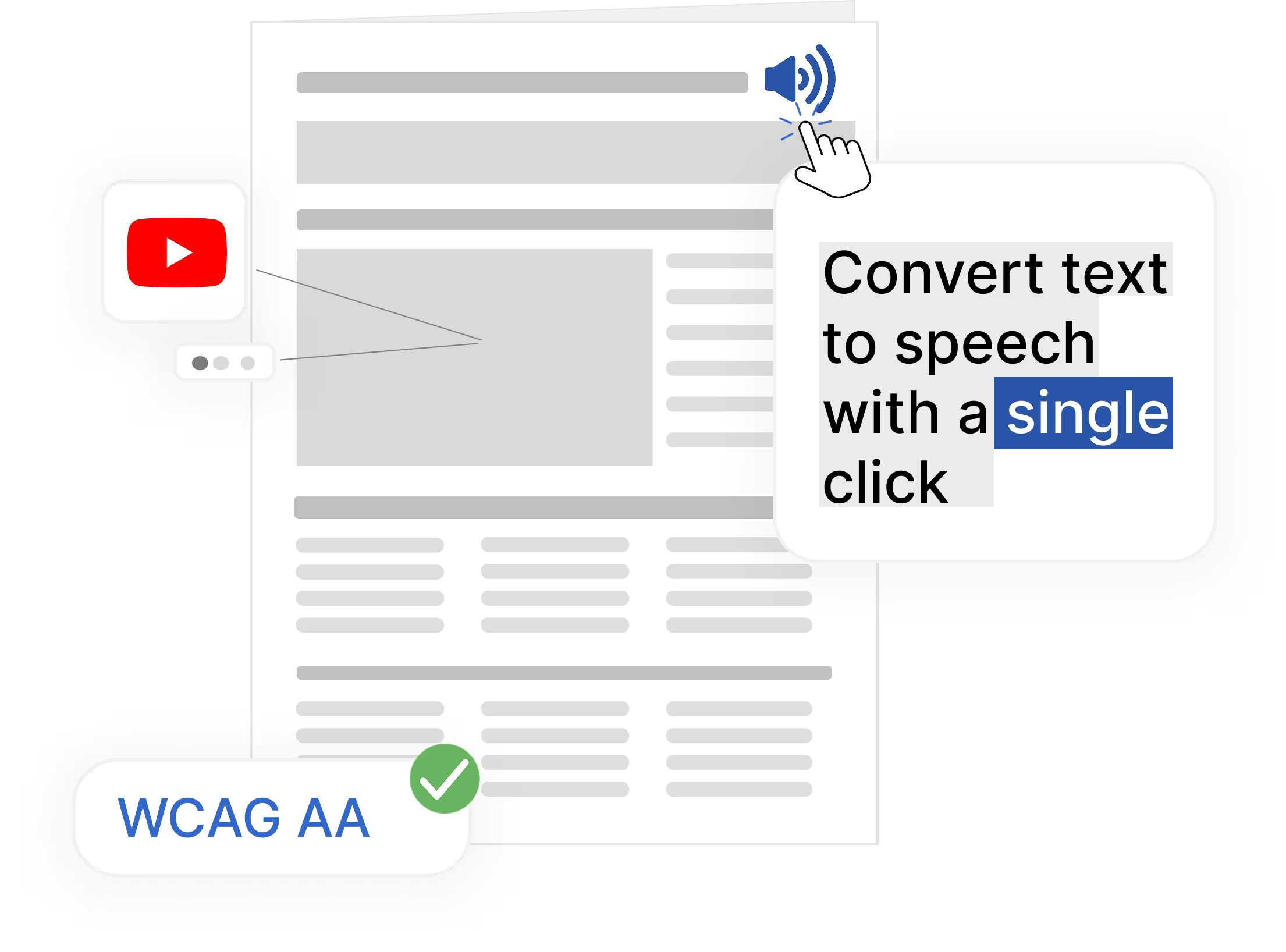
For example, readers can access article content as text rather than only as an image of the printed page, adjust the text size or use text-to-speech to listen to articles.
For publishers, this means the same journalism can work for more people and in more situations.
With Prenly Reader, e-papers and other editorial content can be brought together in a modern and accessible digital reading experience for iOS, Android and the web.
Publish the same newspaper in apps and on the web
Readers use different devices at different times. A digital newspaper should therefore not be limited to a single screen or channel.
With Prenly, newspapers, magazines and media groups can create, package and distribute e-papers and digital editions through one streamlined publishing workflow – from editorial content to apps and the web.
Readers can access the publication wherever it suits them best, while publishers reduce the need to build and maintain separate publishing workflows for every channel.
A digital newspaper can offer more than the print edition
Taking a newspaper digital does not mean the digital product has to be limited to the content that appeared in print.
In Prenly Reader, the e-paper can be combined with other types of editorial and digital content, including:
- articles
- podcasts and audio
- games
- crosswords
- video
- web content
This allows publishers to preserve the strengths of a curated edition while creating a broader digital reading experience and giving readers more reasons to return.
What should a modern digital newspaper be able to do?
When taking a print newspaper digital, it is worth looking beyond the file conversion itself.
Preserve the newspaper layout
Readers should be able to recognise and browse the published edition with the same editorial structure and visual identity as the printed newspaper.
Work well on mobile
Articles and other content need to remain easy to read even when a full newspaper page is too large for the screen. A dedicated reading mode makes it possible to read the same content on smaller devices without constantly zooming and panning.
Make content accessible to more people
Different readers have different needs. Features such as reading mode, adjustable text size and text-to-speech can make content easier to access and consume.
Publish across multiple platforms
The digital edition should work on smartphones, tablets and the web without requiring the editorial team to create separate versions for each channel.
Combine different types of content
A digital reading experience can combine e-papers with articles, audio, podcasts, video, games, crosswords and other editorial content.
Fit into the existing publishing workflow
Digital publishing should not have to create more manual work. A modern publishing platform should work with the editorial systems and workflows a publisher already uses.
Print and digital do not have to be two separate products
For many established publishers, the printed newspaper remains an important part of the offering. Digital publishing does not therefore have to mean replacing print.
Instead, the digital edition can build on what already works: the editorial selection, the publication’s identity and the curated edition. Apps and the web can then give readers more ways to access the same journalism, at more times throughout the day.
This makes it possible to create a hybrid model in which print and digital publishing strengthen each other rather than being treated as two separate strategies.
From print newspaper to a complete digital reading experience
The printed newspaper has many qualities that remain valuable in a digital environment: editorial curation, the structure of an edition and the sense of a clear beginning and end.
The goal does not have to be to replace that experience.
Instead, publishers can take the best parts of the printed newspaper and use digital technology to make them easier to read, more accessible and easier to develop further.
Prenly helps newspapers and magazines create and distribute digital editions and bring them together with other editorial content across apps and the web.
To see how other publishers use Prenly, explore our customer stories and examples from newspapers and media groups.
Explore Prenly’s digital publishing solutions →
Frequently asked questions about taking a print newspaper digital
How do you turn a print newspaper into a digital newspaper?
A print newspaper can be turned into a digital publication by using the finished edition as the basis for an e-paper and adding digital features such as article view, reading mode, adjustable text size and text-to-speech. The digital edition can then be distributed through apps and the web.
Can a PDF newspaper be made mobile-friendly?
Yes. The original newspaper layout can be preserved while the article content is also made available in a reading mode designed for smaller screens.
What is the difference between a PDF and an e-paper?
A PDF primarily reproduces the finished page. A modern e-paper can combine the original edition with features and reading modes designed for digital use, such as article view, text-to-speech and adjustable text size.
Can a digital newspaper work in both an app and on the web?
Yes. With Prenly, digital newspapers and other editorial content can be made available to readers across iOS, Android and the web.
Can an e-paper include content that is not in the printed newspaper?
Yes. The digital reading experience can be expanded with articles, podcasts, audio, video, games, crosswords and web content.
Does the editorial team have to change its existing workflow?
Not necessarily. Prenly is designed to work with existing editorial systems and publishing workflows, allowing digital publishing to become a natural part of day-to-day production.
Does an e-paper also work for magazines?
Yes. The same principles apply to magazines and other periodical publications. The finished edition can be combined with a digital reading mode and enhanced with articles, archives, audio, podcasts and other content between editions.
Learn more about digital publishing for magazines.